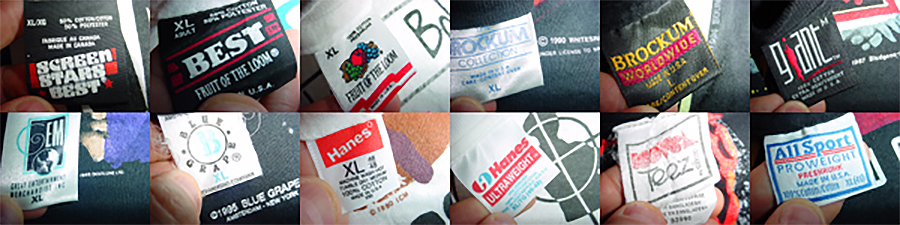

How to Tell if Your Tee is Actually Vintage? (And Not Just "Vintage Inspired")
If you're spending good money on vintage, you deserve to know what you're buying.
Not everything Labelled as "Y2K" is actually Y2k, and not every faded tee is a 70's, 80's or 90's tee. Here's an easy guide on how to date via t-shirt tags; what to look for, what it means, and how to tell if your piece goes hard (not only on looks but as a true vintage piece).
WHY DO TAGS MATTER?
We all know the tag matters and represents a certain era that the tee is from; it's basically it's birth certificate.
Brands are constantly changing logos, manufacturers switch factories, copyright changes, new technologies are invented, materials change, stitching changes etc etc, and this all shows up on the tags and tells a story.
The tag helps to:
- Identify within a few year either side of when the item was made
- Spot reprints
- Avoid fakes and authenticate pieces
- Justify prices
1970 T-SHIRT TAGS:
These tees may have tags that are completed faded or frayed due to the aging but these were often an era of basic, generic tags with minimal colouring, designs and sometimes minimal branding of the company selling the item.They may be on a paper type fabric, usually, always made in USA, and have simple sizing ,or no sizing at all.
The tee is usually 100% cotton, lightweight, single stitch hems and lining, smaller neck openings and a shorter, boxier cut.
Some of the more popular tee's from this era were logo brand tees - companies were noticing that people were wearing brands and they could use this as a marketing tool, Rock and band tees, pop culture and tv show tees, & political and protest tees as movements towards civil rights started becoming more common.
Popular brands during this time were Champion, Russell Athletics, and Fruit of the Loom.

1980'S T-SHIRT TAGS:
The 1980's started to become more of an era where brands were emerging, and the iconic 'ringers' started to come out. Brands like Levi's with the classic 501 jeans became an everyday wear. Ralph Lauren, and Harley Davidson started to become bigger, and Tommy Hilfiger had it's own rise in the late 80's. Anvil and Hanes also started to become a regular in the 80's and brands were becoming more widely manufactured.
Some brands really hit on the sports side of things, following the likes of Champion who were known for their reverse weave sweatshirts with college graphics. Russell athletics were known for their blanks, Nike were known for their NBA and streetwear crossovers, and Starter was known for their licensed NFL, MLB, NBA, & NHL gear.
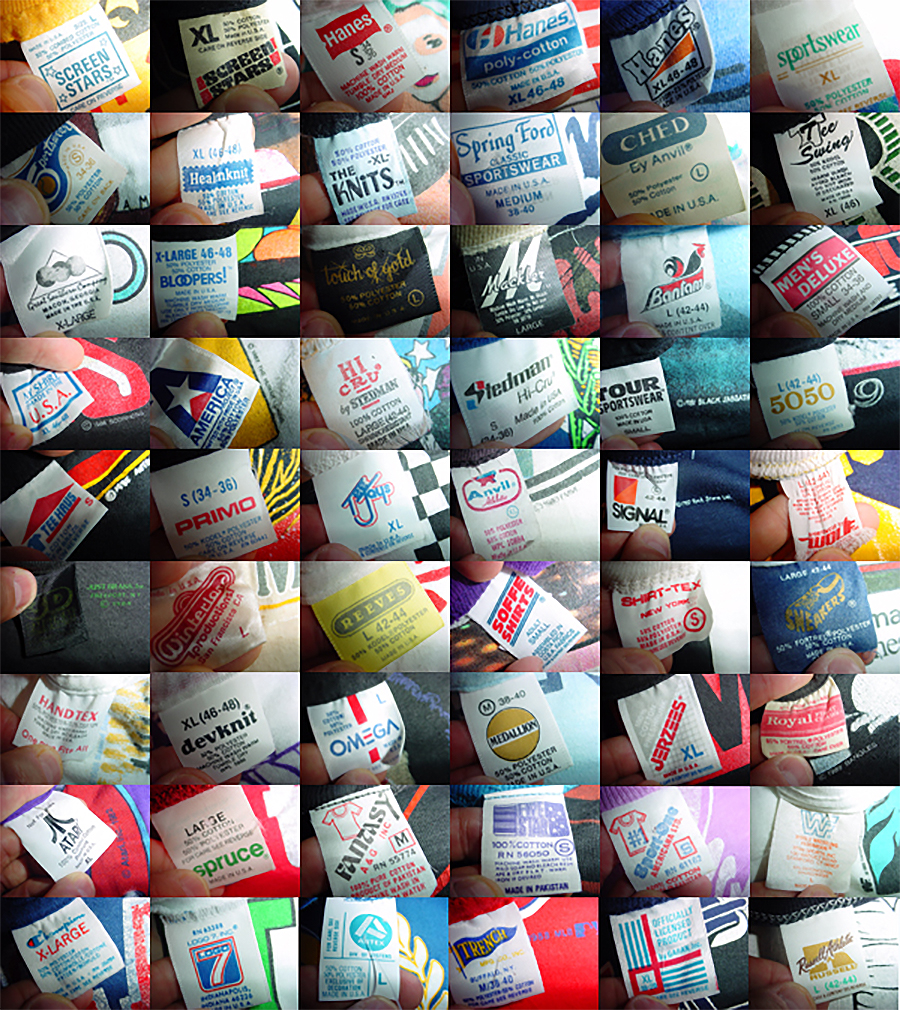
1990's T-SHIRT TAGS:
This is the year where band tees became even bigger than they already were - hitting their peak and licensing became a huge revenue stream. This is where big logos, big graphics, and baggier fits become the norm with the influence of hip hop culture, and subcultures started to matter.
Manufacturers started to trend back towards 100% cotton after the earlier shift to 50/50 tees, and woven tags became more common again. Some companies didn't manufacturer their own garments, printing and embroidering their designed onto blanks, and labelling with a double tag.
The 90's were all about baggy jeans, oversized tees, dropped shoulders, relaxed fits, and boxy sweatshirts.
Prominent brands during this era were Liquid blue, Giant, Best Fruit of the Loom, Carhartt, and surf & skate brands hit hard.